Cardio Support – Liquid Formula with Red Yeast Rice, Lycopene, Hawthorn & CoQ10
Cardio Support – Liquid Formula with Red Yeast Rice, Lycopene, Hawthorn & CoQ10
Food Supplement
Colloidal solution • 250 ml
38.50 €

✅ Cardio Support – Liquid Formula with Red Yeast Rice, Lycopene, Hawthorn & CoQ10
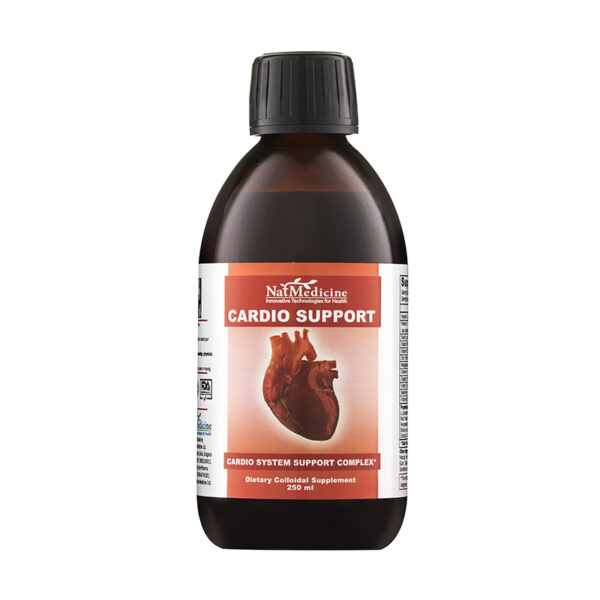
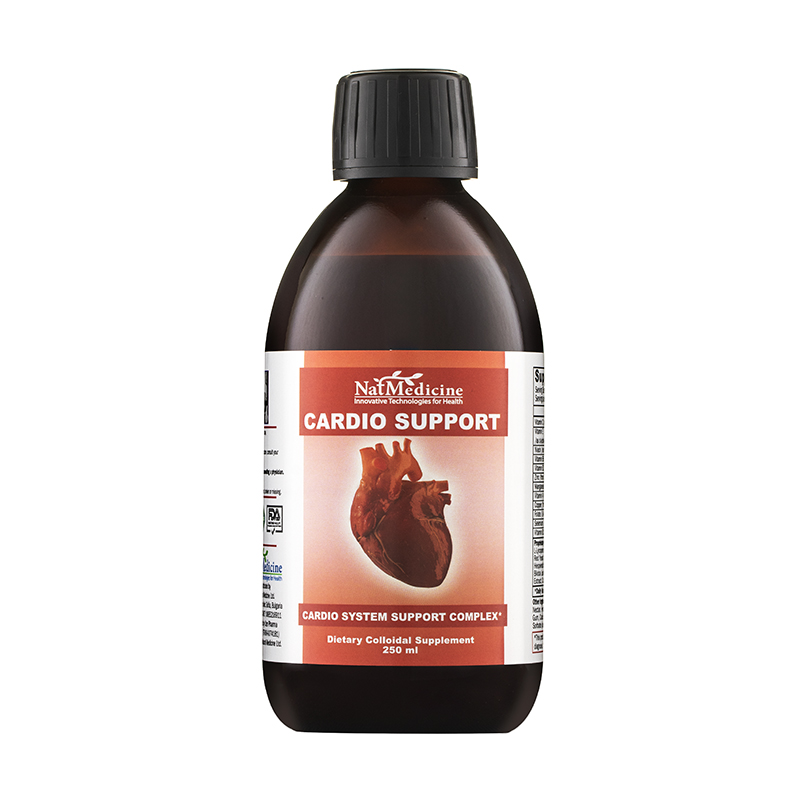
Cardio Support is a liquid food supplement presented as a colloidal solution in a 250 ml dark glass bottle.
🌿 Description
Cardio Support brings together a diverse combination of nutrients and botanical ingredients in one convenient liquid colloidal formula.
At the centre of the formulation is red yeast rice, a traditional fermented ingredient produced using Monascus purpureus, combined with lycopene, the naturally occurring carotenoid best known from tomatoes, and hawthorn, a botanical with a long history of use in European herbal traditions.
The formula is complemented by plant sterols, naturally occurring plant compounds found in vegetable oils, nuts and seeds, together with hesperidin, a citrus bioflavonoid naturally abundant in citrus peel.
Coenzyme Q10 and L-carnitine are naturally occurring compounds also widely used in modern nutritional formulations, while vitamins C and E contribute to the protection of cells from oxidative stress.*
Cardio Support additionally provides niacin, vitamins B2, B6 and B12, folate, zinc, selenium, manganese and copper, creating a broad multi-component nutritional formula designed to complement everyday nutrition.
The liquid format offers a convenient alternative to multiple tablets or capsules and is designed for easy inclusion in daily nutritional routines.
Manufactured in a licensed production facility in accordance with international quality and safety standards.
Due to the natural origin of the ingredients, slight variations in colour, taste and consistency may occur between batches. These natural variations are normal and do not affect the quality or safety of the product.
✨ Product Characteristics
-
Liquid colloidal formulation for convenient daily intake
-
Multi-component composition with plant extracts, vitamins and minerals
-
Designed for inclusion in long-term nutritional routines
-
Suitable for adults with active or dynamic lifestyles
-
Easy-to-use liquid format
🎯 Intended Use
Cardio Support is intended for individuals seeking to complement their daily diet with selected nutrients, particularly during:
-
Periods of increased physical or lifestyle demands
-
Long-term dietary routines
-
Seasonal or routine nutritional adjustments
-
General dietary variety and balance
🧪 Composition
Liquid solution containing the following ingredients:
| Ingredient | Per 5 ml | % NRV* | Per 10 ml | % NRV* |
|---|---|---|---|---|
| Vitamin C (as Ascorbic Acid) | 100 mg | 125% | 200 mg | 250% |
| Lycopene 2% | 100 mg | – | 200 mg | – |
| Lemon Peel Extract (Citrus limon L.) | 57.5 mg | – | 115 mg | – |
| Vitamin E (as D-alpha Tocopheryl Acetate) | 52 mg α-TE | 433% | 104 mg α-TE | 866% |
| Rice Oil | 50 mg | – | 100 mg | – |
| Red Yeast Rice (Monascus purpureus) Standardised Extract with 3% Monacolin K | 35 mg | – | 70 mg | – |
| Hawthorn Flower Extract (Crataegus pinnatifida, 9% Procyanidins) | 17 mg | – | 34 mg | – |
| L-Carnitine | 17 mg | – | 34 mg | – |
| Hesperidin (35% Citrus Bioflavonoids) | 17 mg | – | 34 mg | – |
| Cholestatin (Plant Sterol Concentrate) | 17 mg | – | 34 mg | – |
| Ginkgo biloba Leaf Extract (24:6) | 8 mg | – | 16 mg | – |
| Niacin (as Nicotinamide) | 7 mg NE | 44% | 14 mg NE | 88% |
| Banana Fruit Extract (Musa paradisiaca) | 3.5 mg | – | 7 mg | – |
| Spinach Leaf Extract (Spinacia oleracea) | 3.5 mg | – | 7 mg | – |
| Vitamin B6 (as Pyridoxine Hydrochloride) | 2 mg | 143% | 4 mg | 286% |
| Vitamin B2 (Riboflavin) | 1.7 mg | 121% | 3.4 mg | 243% |
| Coenzyme Q10 | 1.7 mg | – | 3.4 mg | – |
| Alfalfa Leaf Extract (Medicago sativa, 4:1) | 1.7 mg | – | 3.4 mg | – |
| Zinc (from Zinc Citrate) | 1.7 mg | 17% | 3.4 mg | 34% |
| Manganese (as Manganese Glycerophosphate) | 0.7 mg | 35% | 1.4 mg | 70% |
| Vitamin A (as Retinyl Palmitate) | 500 µg RAE | 62.5% | 1000 µg RAE | 125% |
| Copper (from Copper Citrate) | 0.5 mg | 50% | 1 mg | 100% |
| Folate (as Calcium L-Methylfolate) | 150 µg | 75% | 300 µg | 150% |
| Selenium (as L-Selenomethionine) | 70 µg | 127% | 140 µg | 254% |
| Vitamin B12 (as Cyanocobalamin) | 9 µg | 360% | 18 µg | 720% |
*NRV = Nutrient Reference Values according to Regulation (EU) No. 1169/2011.
🌿 Active Ingredient Information
🍋 Vitamin C
What is it?
Vitamin C, also known as ascorbic acid, is an essential water-soluble vitamin naturally found in many fruits and vegetables. Because the human body does not maintain large stores of vitamin C, a regular dietary intake is important.
Vitamin C contributes to the normal function of the immune system, normal collagen formation for the normal function of blood vessels, skin, bones and cartilage, and to the protection of cells from oxidative stress. It also contributes to normal energy-yielding metabolism and increases the absorption of iron.
💡 Interesting Fact
Humans are unusual when it comes to vitamin C. Most mammals can produce it inside their own bodies, but humans, other primates, guinea pigs and a small number of other animals have lost this ability during evolution.
Vitamin C also has a fascinating place in nutritional history. During long sea voyages, sailors could spend months without fresh fruits and vegetables. The observation that citrus fruits helped prevent scurvy eventually became one of the most famous discoveries in the history of nutrition.
🌿 Natural Sources
Blackcurrants, bell peppers, kiwi, strawberries, broccoli, Brussels sprouts, oranges, lemons and grapefruits.
Interestingly, oranges may be famous for vitamin C, but some peppers and blackcurrants naturally contain considerably more vitamin C per 100 g.
🍅 Lycopene
What is it?
Lycopene is a naturally occurring plant pigment belonging to the carotenoid family. It is responsible for the characteristic red or pink colour of tomatoes, watermelon, pink grapefruit and several other fruits.
Unlike beta-carotene, lycopene is not converted into vitamin A in the human body. It is valued instead as one of the many naturally occurring carotenoids present in a plant-rich diet.
💡 Interesting Fact
A tomato becomes red as it ripens largely because its concentration of lycopene increases while the green chlorophyll pigments gradually disappear.
Even more interestingly, tomatoes are one of those foods where processing can change how a plant compound is presented to the body. Heating breaks down parts of the plant structure, and lycopene from cooked tomato products is generally more accessible than lycopene locked inside the cells of a raw tomato.
This is one reason tomato paste, tomato sauce and other cooked tomato products are particularly concentrated dietary sources of lycopene.
🌿 Natural Sources
Tomatoes and tomato products, watermelon, pink grapefruit, guava and papaya.
🍋 Lemon Peel Extract (Citrus limon L.)
What is it?
Lemon peel is much more than the aromatic outer layer of the fruit. It contains a complex mixture of naturally occurring plant substances, including flavonoids and aromatic compounds.
Citrus peel is particularly interesting from a botanical perspective because the plant concentrates many of its characteristic compounds in the peel rather than in the juice.
💡 Interesting Fact
The part of a lemon that is normally discarded is actually one of the most chemically complex parts of the fruit.
The yellow outer layer, known as the flavedo, contains the essential-oil glands responsible for the characteristic lemon aroma. Beneath it lies the white albedo, another part of the peel naturally containing citrus flavonoids and pectin.
This means that the peel and the juice of the same lemon have remarkably different natural compositions.
🌿 Natural Sources
The peel of Citrus limon and other citrus fruits.
🧴 Vitamin E
What is it?
Vitamin E is an essential fat-soluble vitamin. Rather than being a single molecule, “vitamin E” describes a family of related naturally occurring compounds called tocopherols and tocotrienols.
Vitamin E contributes to the protection of cells from oxidative stress.
Because it is fat-soluble, vitamin E is naturally associated with foods containing fats, particularly vegetable oils, nuts and seeds.
💡 Interesting Fact
There are eight naturally occurring forms of vitamin E: four tocopherols and four tocotrienols – alpha, beta, gamma and delta forms of each.
Alpha-tocopherol is the form most closely associated with human vitamin E nutrition.
The name “tocopherol” has Greek roots and was coined after early research into this vitamin during the 20th century.
🌿 Natural Sources
Sunflower seeds, almonds, hazelnuts, wheat germ, avocado and vegetable oils such as sunflower and wheat-germ oil.
🌾 Rice Oil
What is it?
Rice oil, commonly obtained from rice bran, is the lipid fraction naturally present in the outer layers of the rice grain.
In addition to its fatty-acid content, rice bran oil naturally contains a number of minor plant components, including phytosterols, tocopherols, tocotrienols and gamma-oryzanol.
💡 Interesting Fact
Rice may look like a simple grain, but its outer bran layer contains a remarkably complex mixture of naturally occurring compounds.
One particularly characteristic component is gamma-oryzanol – actually a mixture of several compounds rather than a single substance. Its name comes from Oryza sativa, the botanical name for rice.
🌿 Natural Sources
Rice bran from Oryza sativa.
🍚 Red Yeast Rice (Monascus purpureus)
What is it?
Red yeast rice is produced by fermenting rice with Monascus purpureus. During fermentation, the originally pale rice develops its characteristic deep red colour and a different chemical profile.
Red yeast rice has a long history of use in Asian food traditions and is also used today as an ingredient in food supplements.
Cardio Support contains a standardised Red Yeast Rice Extract with 3% Monacolin K.
💡 Interesting Fact
The striking red colour is not simply added to the rice. It develops during fermentation as Monascus microorganisms produce naturally occurring pigments.
Red yeast rice has been known in China for centuries and has traditionally been used both as a food ingredient and as a natural colouring component in certain fermented foods.
It is an interesting example of how fermentation can transform an ordinary food into an ingredient with an entirely different composition, colour and character.
🌿 Natural Sources
Fermented rice produced using Monascus purpureus.
❤️ Hawthorn Extract (Crataegus pinnatifida)
What is it?
Hawthorn belongs to the genus Crataegus, a group of shrubs and small trees in the rose family.
Different parts of hawthorn – particularly its flowers, leaves and berries – naturally contain a range of plant compounds, including polyphenols and procyanidins.
The hawthorn extract in Cardio Support is standardised to 9% procyanidins.
💡 Interesting Fact
Hawthorn is actually related to roses, apples and pears – all belong to the botanical family Rosaceae.
Some hawthorn trees can live for hundreds of years. Because their dense, thorny branches form strong natural barriers, hawthorn was historically planted extensively as hedging.
Its white blossoms and bright berries also made it a familiar plant in European folklore and countryside traditions.
🌿 Natural Sources
Flowers, leaves and berries of Crataegus species.
🏃 L-Carnitine
What is it?
L-Carnitine is a naturally occurring compound made by the human body primarily from the amino acids lysine and methionine.
It is particularly concentrated in tissues with high energy requirements and is also naturally present in certain foods.
💡 Interesting Fact
The name carnitine comes from the Latin word caro or carnis, meaning meat.
This is not accidental: carnitine was first isolated from muscle tissue, and meat – particularly red meat – remains one of its richest dietary sources.
The human body can also produce L-carnitine itself, provided the necessary precursor nutrients are available.
🌿 Natural Sources
Red meat, lamb, beef, fish, poultry and dairy products.
Plant foods generally contain much smaller amounts.
🍊 Hesperidin
What is it?
Hesperidin is a naturally occurring flavonoid, more specifically a flavanone glycoside, characteristic of citrus fruits.
It is found predominantly in citrus peel and in the white inner portions of the fruit.
💡 Interesting Fact
When you peel an orange and remove the white, slightly bitter layer underneath the colourful peel, you are removing a part of the fruit that naturally contains substantial amounts of citrus flavonoids such as hesperidin.
The name hesperidin is connected to the Hesperides of Greek mythology – nymphs associated with a legendary garden and its golden fruits.
It is a beautiful example of botanical chemistry meeting classical mythology.
🌿 Natural Sources
Oranges, mandarins, lemons, grapefruits and other citrus fruits, particularly their peel and white inner layers.
🌱 Plant Sterols – Cholestatin
What is it?
Plant sterols, also known as phytosterols, are naturally occurring components of plant cell membranes.
Their molecular structure resembles that of cholesterol, although they originate from plants.
Hundreds of different phytosterols have been identified, with beta-sitosterol, campesterol and stigmasterol among the best known.
💡 Interesting Fact
Plants need sterols for their cell membranes just as animals rely on cholesterol as an important structural component of theirs.
Despite their microscopic size, plant sterols are found throughout the plant kingdom.
Scientists have identified more than 250 different phytosterols and related plant sterol compounds in nature.
🌿 Natural Sources
Vegetable oils, nuts, seeds, whole grains, legumes, fruits and vegetables.
🌿 Ginkgo Biloba Extract
What is it?
Ginkgo biloba is one of the most distinctive botanical species still living today.
Its characteristic fan-shaped leaves contain a complex mixture of naturally occurring plant compounds, and extracts of ginkgo leaves have a long history of use in botanical preparations.
💡 Interesting Fact
Ginkgo is often described as a “living fossil.”
Fossils of recognisably ginkgo-like leaves date back more than 200 million years, meaning relatives of today’s ginkgo trees existed when dinosaurs walked the Earth.
Even more remarkably, ginkgo has no close living relatives – it is the sole surviving species of an extraordinarily ancient branch of the plant kingdom.
Its unmistakable fan-shaped leaves have remained remarkably characteristic across geological time.
🌿 Natural Sources
Leaves of the Ginkgo biloba tree.
⚡ Niacin – Vitamin B3
What is it?
Niacin is an essential water-soluble B vitamin. The term encompasses forms of vitamin B3 such as nicotinic acid and nicotinamide.
Cardio Support provides niacin as nicotinamide.
Niacin contributes to normal energy-yielding metabolism, normal functioning of the nervous system, normal psychological function and the maintenance of normal skin and mucous membranes. It also contributes to the reduction of tiredness and fatigue.
💡 Interesting Fact
Despite the similar names, niacin and nicotine are not the same thing.
The word “niacin” was deliberately created from the expression nicotinic acid vitamin to help distinguish the vitamin from nicotine.
Niacin also has a central biochemical role because the body uses vitamin B3 to form the coenzymes NAD and NADP, molecules involved in numerous cellular reactions.
🌿 Natural Sources
Poultry, meat, tuna, salmon, peanuts, mushrooms, whole grains and legumes.
🍌 Banana Fruit Extract (Musa paradisiaca)
What is it?
Banana fruit contains a natural mixture of carbohydrates, minerals and numerous plant compounds.
Bananas belong to the genus Musa and have been cultivated by humans for thousands of years.
💡 Interesting Fact
Botanically, a banana plant is not actually a tree.
What looks like a trunk is a “pseudostem” formed from tightly packed leaf bases. The banana is therefore one of the world’s largest herbaceous flowering plants.
There is another botanical surprise: according to botanical classification, the banana fruit itself is technically considered a type of berry.
🌿 Natural Sources
Fruit of Musa species.
🥬 Spinach Leaf Extract (Spinacia oleracea)
What is it?
Spinach is a leafy green plant naturally containing a wide variety of nutrients and plant pigments.
Its intense green colour is produced primarily by chlorophyll, although spinach also naturally contains carotenoid pigments whose colours are largely masked by the dominant green chlorophyll.
💡 Interesting Fact
Spinach contains yellow-orange carotenoid pigments as well as green chlorophyll. We normally cannot see them because the chlorophyll colour is so dominant.
Spinach is also famously associated with Popeye. Interestingly, the popular story that Popeye’s spinach obsession resulted from a misplaced decimal point in early iron measurements is itself largely considered a myth.
So spinach has managed to generate a nutritional legend and a legend about that legend.
🌿 Natural Sources
Leaves of Spinacia oleracea.
💛 Vitamin B6
What is it?
Vitamin B6 refers to a group of related water-soluble compounds. Pyridoxine is one of the best-known forms, while pyridoxal-5′-phosphate (PLP) is the principal biologically active coenzyme form in the body.
Vitamin B6 contributes to normal energy-yielding metabolism, normal protein and glycogen metabolism, normal functioning of the nervous and immune systems and the reduction of tiredness and fatigue.
💡 Interesting Fact
Vitamin B6 is not just one molecule. It exists in several related forms that the body can convert and use.
Its active coenzyme form participates in more than 100 enzyme reactions, many of them involving amino-acid metabolism.
This makes B6 an excellent example of how a nutrient required in tiny amounts can participate in an extraordinary number of biochemical processes.
🌿 Natural Sources
Poultry, fish, chickpeas, potatoes, bananas, whole grains and fortified cereals.
💛 Vitamin B2 – Riboflavin
What is it?
Riboflavin, or vitamin B2, is an essential water-soluble vitamin belonging to the B-complex family.
It contributes to normal energy-yielding metabolism, normal functioning of the nervous system, maintenance of normal red blood cells, skin and vision, and protection of cells from oxidative stress.
💡 Interesting Fact
Riboflavin has an intense yellow-green fluorescent colour.
Its name reflects this: flavus means “yellow” in Latin.
This natural colour is also why some vitamin supplements can give urine a noticeably bright yellow appearance after consumption – excess water-soluble riboflavin can be excreted from the body.
🌿 Natural Sources
Milk and dairy products, eggs, almonds, mushrooms, meat and leafy green vegetables.
🔋 Coenzyme Q10
What is it?
Coenzyme Q10, also known as CoQ10 or ubiquinone, is a naturally occurring compound present in cells throughout the human body.
The body can synthesise CoQ10 itself, and small amounts are also obtained through food.
💡 Interesting Fact
There is a story hidden inside its two names.
The name ubiquinone comes from “ubiquitous,” reflecting the fact that related compounds are widely distributed in living cells.
And why Q10?
The “Q” refers to its quinone chemical structure, while the “10” refers to the chain of ten isoprenoid units attached to the molecule in the form predominantly found in humans.
So “CoQ10” is essentially a tiny chemical description hidden inside the name.
🌿 Natural Sources
Organ meats, beef, chicken, oily fish such as sardines and mackerel, nuts and whole grains.
🌿 Alfalfa Extract (Medicago sativa)
What is it?
Alfalfa is a perennial plant belonging to the legume family. It has deep roots and has been cultivated for centuries in many parts of the world.
Its leaves naturally contain a diverse mixture of plant nutrients and phytochemicals.
💡 Interesting Fact
The name alfalfa is believed to have come into European languages through Arabic, reflecting the plant’s long agricultural history.
Its root system can extend remarkably deep into the soil under favourable conditions, helping the plant access water and minerals unavailable to many shallow-rooted plants.
Alfalfa is also a legume, which means it participates in the fascinating relationship between certain plants and soil bacteria involved in nitrogen fixation.
🌿 Natural Sources
Leaves and aerial parts of Medicago sativa.
🧬 Zinc
What is it?
Zinc is an essential trace mineral required in small amounts but involved in a remarkably wide range of biological processes.
Zinc contributes to normal DNA synthesis, normal acid-base and carbohydrate metabolism, normal cognitive function, normal fertility and reproduction, normal function of the immune system and protection of cells from oxidative stress. It also contributes to the maintenance of normal skin, hair, nails, bones and vision.
💡 Interesting Fact
Zinc is associated with the activity of hundreds of enzymes in the human body.
It is also involved in the normal perception of taste and smell – two senses we rarely associate with minerals.
Although the body needs only relatively small amounts of zinc, it is distributed throughout many tissues.
🌿 Natural Sources
Oysters and other seafood, meat, pumpkin seeds, nuts, legumes and dairy products.
🧬 Manganese
What is it?
Manganese is an essential trace mineral needed by the body in very small quantities.
It contributes to normal energy-yielding metabolism, maintenance of normal bones, normal formation of connective tissue and protection of cells from oxidative stress.
💡 Interesting Fact
Manganese is required in tiny nutritional amounts, yet it is also an element widely distributed throughout the Earth’s crust.
Plants can take manganese from the soil, which is why foods such as whole grains, nuts, tea and leafy vegetables naturally contain it.
Its name is sometimes confused with magnesium, but manganese and magnesium are completely different chemical elements with different properties and nutritional roles.
🌿 Natural Sources
Whole grains, nuts, tea, legumes and leafy green vegetables.
👁️ Vitamin A
What is it?
Vitamin A is an essential fat-soluble vitamin. It can be obtained directly from certain animal foods as preformed vitamin A, while some plant carotenoids, particularly beta-carotene, can be converted by the body into vitamin A.
Vitamin A contributes to the maintenance of normal vision, skin and mucous membranes, normal iron metabolism and normal function of the immune system.
💡 Interesting Fact
Vitamin A has a particularly fascinating connection with light.
One of its derivatives is incorporated into rhodopsin, a light-sensitive pigment found in the retina of the eye. This molecule participates in the visual process under low-light conditions.
This is why the connection between vitamin A and normal vision is not merely historical folklore – it has a clear biochemical basis.
🌿 Natural Sources
Liver, eggs and dairy products provide preformed vitamin A.
Carrots, sweet potatoes, pumpkin, spinach and other colourful vegetables provide provitamin A carotenoids such as beta-carotene.
🥉 Copper
What is it?
Copper is an essential trace mineral naturally distributed throughout the human body.
It contributes to normal energy-yielding metabolism, normal functioning of the nervous and immune systems, normal transport of iron in the body, maintenance of normal connective tissues and protection of cells from oxidative stress.
💡 Interesting Fact
Copper connects human biology with one of the oldest chapters of civilisation.
Humans have worked with copper for thousands of years, and its use eventually led to the development of bronze – an alloy of copper and tin – and an entire historical period known as the Bronze Age.
The same chemical element that helped transform early human technology is also required by the body in tiny nutritional amounts.
🌿 Natural Sources
Shellfish, liver, cocoa, nuts, seeds, legumes and whole grains.
🌱 Folate – Calcium L-Methylfolate
What is it?
Folate belongs to the B-vitamin family and is also known as vitamin B9.
Cardio Support contains folate as calcium L-methylfolate, a source of L-methylfolate.
Folate contributes to normal amino-acid synthesis, normal blood formation, normal psychological function and normal function of the immune system. It also contributes to the reduction of tiredness and fatigue and has a role in the process of cell division.
💡 Interesting Fact
The name folate comes from the Latin word folium, meaning leaf.
The connection is very appropriate because dark leafy green vegetables are among the best-known natural dietary sources of folate.
Folate and folic acid are often used as if they were identical terms, but they are not chemically identical. “Folate” describes naturally occurring and biologically related forms of vitamin B9, while folic acid is a specific synthetic form.
🌿 Natural Sources
Spinach, kale and other leafy vegetables, asparagus, broccoli, beans, lentils, avocado and citrus fruits.
🛡️ Selenium
What is it?
Selenium is an essential trace element required by the body in extremely small amounts.
Cardio Support provides selenium as L-selenomethionine, an organic selenium-containing form.
Selenium contributes to the normal function of the immune system and thyroid, maintenance of normal hair and nails and protection of cells from oxidative stress.
💡 Interesting Fact
The amount of selenium naturally present in a plant food can vary dramatically depending on where the plant was grown.
Why? Because plants obtain selenium from the soil, and selenium concentrations in soil differ considerably between geographical regions.
Brazil nuts are famous for their selenium content, but even individual nuts can contain quite different amounts depending on the soil in which the tree grew.
The element itself was named after Selene, the Greek goddess of the Moon.
🌿 Natural Sources
Brazil nuts, seafood, fish, eggs, meat and cereals.
💉 Vitamin B12
What is it?
Vitamin B12, also known as cobalamin, is an essential water-soluble vitamin with one of the most structurally complex molecules of all vitamins.
Cardio Support contains vitamin B12 as cyanocobalamin.
Vitamin B12 contributes to normal energy-yielding metabolism, normal functioning of the nervous and immune systems, normal red blood cell formation, normal psychological function and the reduction of tiredness and fatigue. It also has a role in the process of cell division.
💡 Interesting Fact
Vitamin B12 contains the mineral cobalt at the centre of its molecular structure – hence the name cobalamin.
Even more fascinating is its origin. Vitamin B12 is not fundamentally produced by plants or animals. It is synthesised by certain microorganisms.
Animals obtain and accumulate B12 through microbial and food-chain processes, which is why animal-derived foods are the principal natural dietary sources for humans.
B12 is also remarkable because the human body can store comparatively substantial reserves of it, particularly in the liver.
🌿 Natural Sources
Liver, meat, fish, shellfish, eggs and dairy products. Fortified foods can provide additional dietary sources, particularly for people following plant-based diets.
🍃 Product Features
✔️ Alcohol-free
✔️ Gluten-free
✔️ Wheat-free
✔️ Lactose-free
✔️ Non-GMO
✔️ Free from artificial colors and flavorings
🥄 Directions for Use
Recommended intake for adults: Take 5 ml 1-2 times daily before meals
Shake before each use.
Take directly or dilute with water or juice, if preferred.
Store at room temperature in a dry place, away from direct sunlight.
Refrigerate after opening and consume within 3 months.
🤝 Recommended Product Combinations
For comprehensive daily nutritional support, Cardio Support can be combined with other NatLiquid™ products according to individual nutritional preferences and everyday wellness routines.
Examples include:
❤️ AngiΩmega Complex – complements everyday nutrition with omega-3, omega-6 and omega-9 fatty acids, making it an excellent addition to daily nutritional routines focused on a balanced intake of essential fatty acids.
https://natmedicine.org/product/angi-omega-complex/
🛡️ Anti-Oxidant Complex – provides a combination of vitamins, botanical extracts and naturally occurring antioxidants, making it a suitable complement during periods of increased physical activity, demanding daily routines or post-exercise recovery.
https://natmedicine.org/product/anti-oxidant-complex/
💪 Male Active Complex – formulated for men seeking to complement their daily nutrition with carefully selected botanical extracts, vitamins and minerals as part of an active lifestyle and everyday vitality.
https://natmedicine.org/product/male-active-complex/
🏃 Arthro Complex – designed to complement everyday nutrition with ingredients commonly included in joint and mobility formulations, making it a suitable choice for physically active individuals and sports enthusiasts.
https://natmedicine.org/product/arthro-complex-joint-mobility-support/
⚠️ Important Information
- Do not exceed the recommended daily intake.
- Food supplements should not be used as a substitute for a varied, balanced diet and a healthy lifestyle.
- Not suitable for pregnant or breastfeeding women.
- Not suitable for individuals under 18 years of age.
- Do not consume this product if you are taking cholesterol-lowering medication.
- Do not consume this product if you are already taking other products containing red yeast rice.
- Consult a healthcare professional before using this product if you have any medical condition.
- The daily intake of monacolins from red yeast rice should not equal or exceed 3 mg.
- This product contains less than 3 mg of monacolin K per recommended daily intake.
- Keep out of reach of young children.
- Individuals with known allergies or hypersensitivity to botanical ingredients should consult a healthcare professional before use.
❓ FAQ
Q: What is NatLiquid™ Cardio Support?
A: NatLiquid™ Cardio Support is a liquid food supplement formulated with carefully selected botanical extracts, vitamins, minerals and naturally derived compounds. It is designed to complement everyday nutrition as part of a varied, balanced diet and a healthy lifestyle.
Q: Can NatLiquid™ Cardio Support be used daily?
A: Yes. NatLiquid™ Cardio Support is intended for regular daily use according to the recommended intake.
Q: Does NatLiquid™ Cardio Support contain artificial colours or flavourings?
A: No. The product is free from artificial colours and flavourings.
Q: What makes NatLiquid™ Cardio Support unique?
A: The formula combines carefully selected botanical extracts, vitamins, minerals and naturally derived compounds, including red yeast rice, lycopene, hawthorn extract, plant sterols, citrus bioflavonoids and coenzyme Q10, in one convenient liquid colloidal formulation.
Q: Why does NatLiquid™ Cardio Support contain red yeast rice?
A: Red yeast rice is a traditional fermented ingredient obtained from Monascus purpureus. It has been used in Asia for centuries and is commonly included in modern nutritional formulations.
Q: Why does NatLiquid™ Cardio Support contain botanical extracts?
A: The formula includes carefully selected botanical ingredients such as hawthorn, ginkgo biloba, lemon peel, spinach, banana and alfalfa. These plants naturally contain a variety of phytochemicals and are commonly included in food supplements.
Q: Why is NatLiquid™ Cardio Support provided in liquid form?
A: The liquid colloidal formulation is easy to measure and convenient to incorporate into everyday nutritional routines. It also provides an alternative to tablets and capsules.
Q: Is NatLiquid™ Cardio Support economical to use?
A: Yes. One 250 ml bottle provides up to 25 servings when taken according to the standard recommended intake of 10 ml per day.
Q: Can NatLiquid™ Cardio Support be included in an active lifestyle?
A: Yes. NatLiquid™ Cardio Support is designed to complement everyday nutrition and may be included as part of a balanced diet and an active lifestyle.
Q: How many daily servings does one bottle provide?
A: Each 250 ml bottle provides up to 25 servings when used according to the recommended intake of 10 ml daily.
🔗Additional Information
Learn more about our approach to liquid colloidal formulas on the Why Liquid page, or explore other products in our Online Store.
Food supplements are intended to complement the normal diet and should be used as part of a varied, balanced diet and a healthy lifestyle.
General information about food supplements is available on the European Food Safety Authority (EFSA) website.