Life Multi Factor – Liquid Vitamins and Minerals Formula
Life Multi Factor – Liquid Vitamins and Minerals Formula
Sale -50 %, Shelf life :12/26, No other discounts apply
Food Supplement
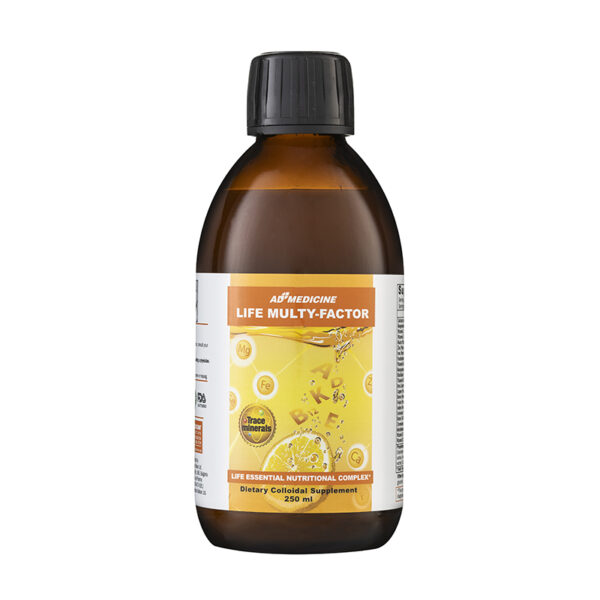
Colloidal solution • 250 ml
Original price was: 38.50 €.19.25 €Current price is: 19.25 €.

✅ Life Multi Factor – Liquid Vitamins and Minerals Formula
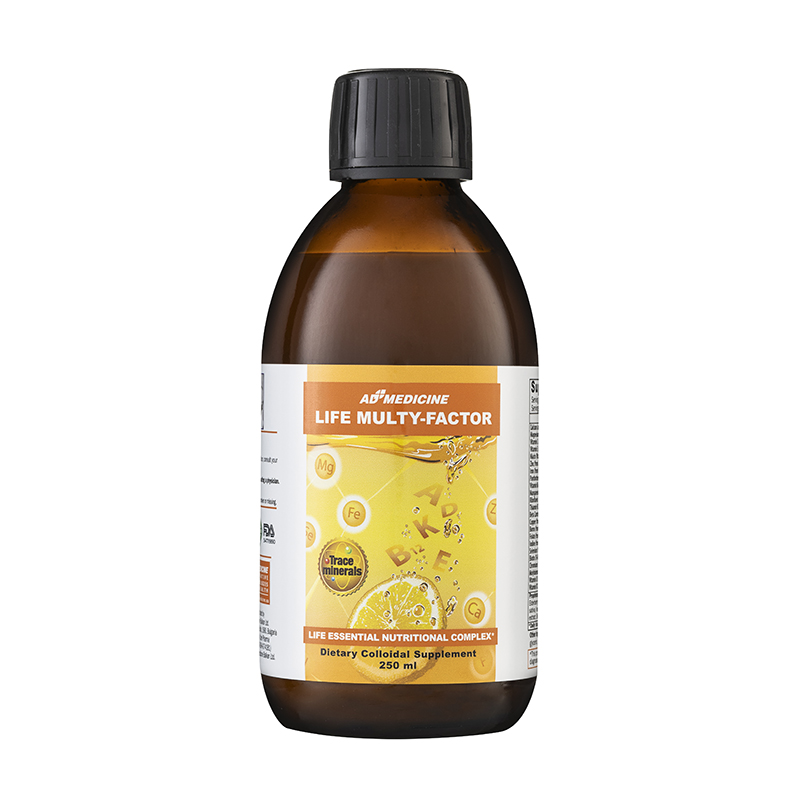
Life Multi Factor – Liquid Vitamins and Minerals Formula is a liquid food supplement presented as a colloidal solution in a 250 ml dark glass bottle. The product is designed for everyday nutritional use and contains a balanced combination of vitamins, minerals and plant-based ingredients in a liquid colloidal formulation.
🌿 Description
Life Multi Factor is a liquid food supplement formulated with vitamins, minerals and selected plant extracts.
The product is designed to complement daily nutrition as part of a balanced lifestyle.
Manufactured in a licensed production facility in accordance with international quality and safety standards.
Due to the natural origin of the ingredients, slight variations in colour, taste and consistency may occur between batches. These natural variations are normal and do not affect the quality or safety of the product.
✨ Product Characteristics
-
Liquid colloidal formulation for convenient daily intake
-
Multi-component composition with vitamins, minerals and botanical extracts
-
Designed for everyday nutritional use.
-
Suitable for adults as part of a varied diet
-
Easy-to-take liquid formulation
🎯 Intended Use
Life Multi Factor is intended for individuals seeking to complement their daily diet with essential micronutrients, particularly during:
-
Busy lifestyles
-
Long-term nutritional support
-
Dietary restrictions or limited food variety
-
General dietary balance and variety
🧪 Composition
Liquid solution containing the following ingredients:
| Ingredient | Per 5 ml | % NRV* |
|---|---|---|
| Calcium (from Calcium Citrate) | 300 mg | 37.5% |
| Magnesium (from Magnesium Citrate) | 150 mg | 40% |
| Vitamin C (as Ascorbic Acid) | 90 mg | 112.5% |
| Vitamin E (as D-alpha Tocopheryl Acetate) | 30 mg α-TE | 250% |
| Black Elderberry (Sambucus nigra) Fruit Extract | 30 mg | – |
| Alfalfa (Medicago sativa) Leaf Extract | 30 mg | – |
| Sarsaparilla (Smilax officinalis) Root Extract | 25 mg | – |
| Niacin (as Nicotinamide) | 20 mg | 125% |
| Bioflavonoid Complex | 20 mg | – |
| Hesperidin | 20 mg | – |
| Zinc (from Zinc Citrate) | 12 mg | 120% |
| Iron (from Iron Bisglycinate) | 10 mg | 71.4% |
| Pantothenic Acid (as Calcium D-Pantothenate) | 5 mg | 83.3% |
| Vitamin B6 (as Pyridoxine Hydrochloride) | 2 mg | 142.9% |
| Manganese (as Manganese Glycerophosphate) | 2 mg | 100% |
| Vitamin B2 (Riboflavin) | 1.8 mg | 128.6% |
| Vitamin B1 (as Thiamine Hydrochloride) | 1.5 mg | 136.4% |
| Beta-Carotene | 1 mg | – |
| Vitamin A (from Beta-Carotene) | 83 μg RAE | 10% |
| Copper (from Copper Gluconate) | 1 mg | 100% |
| Boron (from Amino Acid Chelate) | 1 mg | – |
| Folate (5-MTHF) | 400 μg | 200% |
| Iodine (from Potassium Iodide) | 75 μg | 50% |
| Selenium (as L-Selenomethionine) | 70 μg | 127% |
| Biotin | 50 μg | 100% |
| Chromium (from Chromium Picolinate) | 50 μg | 125% |
| Molybdenum (from Amino Acid Chelate) | 50 μg | 100% |
| Vitamin D3 (as Cholecalciferol) | 7.5 μg | 150% |
| Vitamin B12 (as Cyanocobalamin) | 3 μg | 120% |
*NRV = Nutrient Reference Values according to Regulation (EU) No. 1169/2011.
🌿 Active Ingredient Information
🍀 Calcium
What is it?
Calcium is the most abundant mineral in the human body. It is naturally present in dairy products, leafy green vegetables and mineral-rich foods, and is widely included in food supplements as an essential dietary mineral.
💡 Interesting Fact
Approximately 99% of the body’s calcium is naturally stored in bones and teeth.
🌿 Natural Sources
Milk, cheese, yogurt, kale, broccoli, almonds and mineral water.
⚡ Magnesium
What is it?
Magnesium is an essential mineral naturally found in many plant and whole-food sources. It is widely included in nutritional formulations.
💡 Interesting Fact
Magnesium participates in more than 300 enzymatic reactions in the human body, making it one of the most extensively studied minerals in nutrition.
🌿 Natural Sources
Pumpkin seeds, almonds, spinach, whole grains, legumes and dark chocolate.
🛡️ Vitamin C
What is it?
Vitamin C is a water-soluble vitamin naturally present in fruits and vegetables and commonly included in food supplements.
💡 Interesting Fact
Unlike humans, most mammals produce their own vitamin C, while humans must obtain it through food or supplements.
🌿 Natural Sources
Oranges, kiwi, strawberries, blackcurrants, peppers and broccoli.
🌸 Black Elderberry Extract (Sambucus nigra)
What is it?
Black elderberry is a traditional European botanical ingredient naturally rich in anthocyanins and polyphenols.
💡 Interesting Fact
Elderberry has been used in European herbal traditions for hundreds of years and is one of the best-known botanical ingredients in traditional nutrition.
🌿 Natural Sources
The berries and flowers of the elder tree (Sambucus nigra).
🌱 Alfalfa Extract (Medicago sativa)
What is it?
Alfalfa is a nutrient-rich botanical ingredient commonly included in nutritional formulations.
💡 Interesting Fact
Alfalfa has been cultivated for more than 2,000 years and is often referred to as the “Father of All Foods” because of its naturally diverse nutrient profile.
🌿 Natural Sources
Leaves of Medicago sativa.
💧 Vitamin E
What is it?
Vitamin E is a naturally occurring fat-soluble vitamin found in many plant oils, seeds and nuts.
💡 Interesting Fact
Vitamin E is actually a family of eight naturally occurring compounds, including tocopherols and tocotrienols.
🌿 Natural Sources
Sunflower oil, wheat germ oil, almonds, hazelnuts and sunflower seeds.
🌿 Sarsaparilla Root Extract (Smilax officinalis)
What is it?
Sarsaparilla is a botanical ingredient traditionally included in herbal nutritional formulations.
💡 Interesting Fact
The root naturally contains saponins and has been traditionally used in Central and South America for centuries.
🌿 Natural Sources
Roots of Smilax species.
🔥 Niacin (Vitamin B3)
What is it?
Niacin is an essential member of the vitamin B family commonly included in multivitamin formulations.
💡 Interesting Fact
The name niacin comes from the words nicotinic acid vitamin, although it has no connection with nicotine found in tobacco.
🌿 Natural Sources
Chicken, tuna, mushrooms, peanuts and whole grains.
🍊 Bioflavonoid Complex & Hesperidin
What is it?
Bioflavonoids are naturally occurring plant compounds abundant in citrus fruits.
💡 Interesting Fact
Scientists have identified more than 6,000 different flavonoids in plants.
🌿 Natural Sources
Oranges, lemons, grapefruits and other citrus fruits.
🧬 Zinc
What is it?
Zinc is an essential trace mineral naturally present in a wide variety of foods.
💡 Interesting Fact
Zinc is found in every cell of the human body.
🌿 Natural Sources
Seafood, meat, pumpkin seeds, legumes and nuts.
🔴 Iron
What is it?
Iron is an essential dietary mineral commonly included in nutritional products.
💡 Interesting Fact
Iron gives blood its characteristic red colour because it forms part of haemoglobin.
🌿 Natural Sources
Red meat, legumes, spinach and lentils.
💥 Pantothenic Acid (Vitamin B5)
What is it?
Pantothenic acid is a water-soluble B-vitamin naturally present in many foods.
💡 Interesting Fact
Its name comes from the Greek word “pantothen”, meaning “from everywhere,” because it is naturally found in almost all foods.
🌿 Natural Sources
Eggs, mushrooms, avocados, chicken and whole grains.
💛 Vitamin B6
What is it?
Vitamin B6 is a water-soluble vitamin belonging to the B-complex family.
💡 Interesting Fact
Vitamin B6 exists naturally in several different forms, with pyridoxine being the best known.
🌿 Natural Sources
Bananas, potatoes, poultry, fish and chickpeas.
🟣 Manganese
What is it?
Manganese is a naturally occurring trace mineral commonly included in mineral formulations.
💡 Interesting Fact
Despite being required only in very small amounts, manganese is naturally present throughout the body.
🌿 Natural Sources
Whole grains, tea, nuts and leafy vegetables.
💛 Vitamin B2 (Riboflavin)
What is it?
Vitamin B2 is a naturally occurring member of the B-vitamin family.
💡 Interesting Fact
The word riboflavin comes from the Latin word “flavus”, meaning yellow, because the vitamin has a naturally bright yellow colour.
🌿 Natural Sources
Milk, eggs, mushrooms and almonds.
💛 Vitamin B1 (Thiamine)
What is it?
Vitamin B1 is a water-soluble vitamin naturally present in many foods.
💡 Interesting Fact
It was the first B-vitamin ever discovered, giving it the name Vitamin B1.
🌿 Natural Sources
Whole grains, legumes, sunflower seeds and pork.
🥉 Copper
What is it?
Copper is an essential trace mineral naturally present in many foods.
💡 Interesting Fact
The human body contains only about 80–100 mg of copper, yet it is naturally distributed throughout many tissues.
🌿 Natural Sources
Shellfish, cocoa, nuts and seeds.
🧩 Boron
What is it?
Boron is a naturally occurring trace element increasingly included in modern nutritional formulations.
💡 Interesting Fact
Boron is naturally present in many fruits and vegetables, particularly those grown in mineral-rich soils.
🌿 Natural Sources
Apples, pears, raisins, almonds and avocados.
🧡 Beta-Carotene
What is it?
Beta-carotene is a naturally occurring orange-red carotenoid found in colourful fruits and vegetables.
💡 Interesting Fact
It is responsible for the bright orange colour of carrots and pumpkins.
🌿 Natural Sources
Carrots, sweet potatoes, pumpkin and apricots.
🌿 Folate (5-MTHF)
What is it?
Folate is an essential B-vitamin. This formula contains folate as 5-MTHF, the biologically active form.
💡 Interesting Fact
The word folate comes from the Latin word “folium”, meaning leaf.
🌿 Natural Sources
Spinach, kale, broccoli and legumes.
🧂 Iodine
What is it?
Iodine is a naturally occurring trace mineral found mainly in marine foods.
💡 Interesting Fact
Its name comes from the Greek word “ioeides”, meaning violet-coloured, referring to iodine vapour.
🌿 Natural Sources
Seaweed, fish, shellfish and dairy products.
🛡️ Selenium
What is it?
Selenium is a naturally occurring trace mineral. This formula provides selenium as L-selenomethionine.
💡 Interesting Fact
Brazil nuts are among the richest natural food sources of selenium.
🌿 Natural Sources
Brazil nuts, seafood, eggs and cereals.
🔵 Chromium
What is it?
Chromium is an essential trace mineral commonly included in multivitamin and mineral formulations.
💡 Interesting Fact
Chromium is naturally present only in very small amounts in most foods.
🌿 Natural Sources
Broccoli, whole grains, brewer’s yeast and meat.
🔧 Biotin
What is it?
Biotin, also known as Vitamin B7, is a water-soluble vitamin belonging to the B-complex family.
💡 Interesting Fact
The name biotin comes from the ancient Greek word “bios”, meaning life.
🌿 Natural Sources
Eggs, nuts, seeds and legumes.
⚙️ Molybdenum
What is it?
Molybdenum is a naturally occurring trace mineral required only in very small amounts.
💡 Interesting Fact
Although needed in tiny quantities, molybdenum is naturally present in many plant foods.
🌿 Natural Sources
Beans, lentils, peas and whole grains.
🌞 Vitamin D3
What is it?
Vitamin D3 is the naturally occurring form of vitamin D produced in the skin following sunlight exposure.
💡 Interesting Fact
It is often called the “sunshine vitamin.”
🌿 Natural Sources
Fatty fish, egg yolks and fortified foods, while sunlight remains the body’s primary natural source.
💉 Vitamin B12
What is it?
Vitamin B12 is a water-soluble vitamin naturally found almost exclusively in foods of animal origin.
💡 Interesting Fact
Vitamin B12 was the last vitamin to be discovered, in 1948.
🌿 Natural Sources
Meat, fish, dairy products and eggs.
All ingredients are presented in a liquid colloidal formulation. Wherever applicable, vitamins and minerals are provided in carefully selected forms such as citrate, bisglycinate, picolinate, 5-MTHF and L-selenomethionine, which are widely used in premium nutritional products.
🍃 Product Features
✔️ Alcohol-free
✔️ Gluten-free
✔️ Wheat-free
✔️ Lactose-free
✔️ Non-GMO
✔️ Free from artificial colors and flavorings
🥄 Directions for Use
Recommended intake: 5 ml daily, before meals, preferably for 1.5 to 2 months.
Shake before each use.
Take directly or dilute with water or juice, if preferred.
Store at room temperature in a dry place, away from direct sunlight.
Refrigerate after opening and consume within 3 months.
Recommended Product Combinations
For comprehensive daily nutritional support, Life Multi Factor can be combined with other NatLiquid™ products depending on individual nutritional preferences and daily routines.
Examples include:
- AngiΩmega Complex – Liquid Omega 3-6-9 Formula
https://natmedicine.org/product/angi-omega-complex/ - Beauty Natural – Liquid Marine Collagen with Hyaluronic Acid
https://natmedicine.org/product/beauty-natural/ - Brain Booster – Liquid Formula with Citicoline & L-Theanine
https://natmedicine.org/product/brain-booster/ - Visio Complex – Liquid Eye Formula with Taurine & Lutein
https://natmedicine.org/product/visio-complex/
⚠️Important Information
- Do not exceed the recommended daily intake.
- Food supplements should not be used as a substitute for a varied, balanced diet and a healthy lifestyle.
- Not suitable for children.
- During pregnancy and breastfeeding, use only after consulting a healthcare professional.
- Do not use if you are allergic or hypersensitive to iodine or any of the ingredients.
- Contains iron. Keep out of reach of young children.
- Individuals with thyroid disorders, kidney disease or disorders of iron metabolism should consult a healthcare professional before use.
- If you are taking medication or other food supplements, consult a healthcare professional before use.
❓ FAQ about Liquid Vitamins and Minerals Formula
Q: What is Life Multi Factor?
A: Life Multi Factor is a liquid Vitamins and Minerals Formula, food supplement formulated with vitamins, minerals and carefully selected botanical extracts. It is designed to complement everyday nutrition as part of a varied, balanced diet and a healthy lifestyle.
Q: Can Life Multi Factor be used daily?
A: Yes. Life Multi Factor is intended for regular daily nutritional use according to the recommended intake.
Q: Does Life Multi Factor contain artificial colours or flavourings?
A: No. The product is free from artificial colours and flavourings.
Q: What makes Life Multi Factor unique?
A: Life Multi Factor combines vitamins, minerals and selected botanical extracts in one liquid colloidal formula. Wherever applicable, the vitamins and minerals are provided in carefully selected forms such as citrate, bisglycinate, picolinate, 5-MTHF and L-selenomethionine, which are widely used in modern nutritional formulations.
Q: Does Life Multi Factor contain trace minerals that are less commonly included in standard multivitamin formulas?
A: Yes. In addition to essential vitamins and minerals, Life Multi Factor contains trace elements such as boron, molybdenum and chromium, together with selected forms of selenium, iodine, zinc and iron. This creates a broad and carefully designed micronutrient composition.
Q: Why does Life Multi Factor contain botanical extracts?
A: The formula includes black elderberry, alfalfa and sarsaparilla in addition to vitamins and minerals. These botanical ingredients naturally contain a variety of plant compounds and are commonly included in modern nutritional formulations.
Q: Is Life Multi Factor economical to use?
A: Yes. The recommended daily intake is only 5 ml. One 250 ml bottle therefore provides up to 50 daily servings, making it a practical and economical option for everyday nutritional use.
Q: Why is the recommended daily intake only 5 ml?
A: Life Multi Factor is a concentrated liquid formula. Each 5 ml serving contains a carefully balanced combination of vitamins, minerals and botanical ingredients in a convenient amount for daily use.
Q: Why are the vitamins and minerals provided in different chemical forms?
A: Different vitamin and mineral forms are selected according to factors such as stability, compatibility and their established use in nutritional products. Life Multi Factor includes forms such as calcium citrate, magnesium citrate, iron bisglycinate, zinc citrate, chromium picolinate, 5-MTHF and L-selenomethionine.
Q: Why is Life Multi Factor provided in liquid form?
A: The liquid colloidal format is easy to measure and convenient to include in everyday nutritional routines. It also provides an alternative for people who prefer liquid supplements to tablets or capsules.
Q: How many daily servings does one bottle provide?
A: Each 250 ml bottle provides up to 50 servings when used according to the recommended intake of 5 ml per day.
Q: Is Life Multi Factor suitable for long-term use?
A: Life Multi Factor is designed for regular nutritional use according to the recommended intake. For individual use over longer periods, especially when taking medication or other food supplements, it is advisable to consult a healthcare professional.
Additional Information
Learn more about our approach to liquid colloidal formulas on the Why Liquid page, or explore other products in our Online Store.
Food supplements are intended to complement the normal diet and should be used as part of a varied, balanced diet and a healthy lifestyle.
General information about food supplements is available on the European Food Safety Authority (EFSA) website.